Texas CRE Cap Rates | Texas Commercial Real Estate
boehm / May 20, 2026
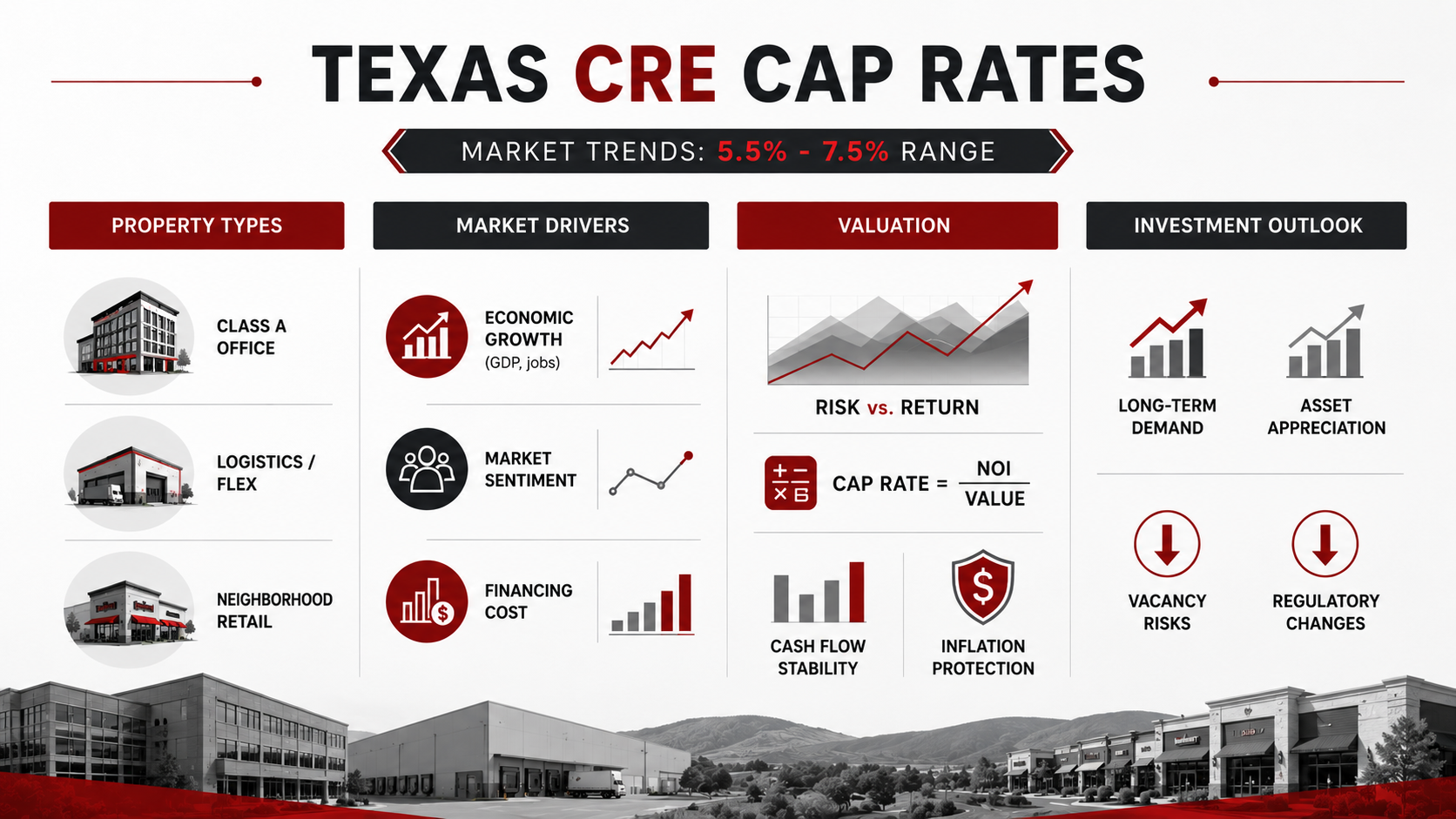
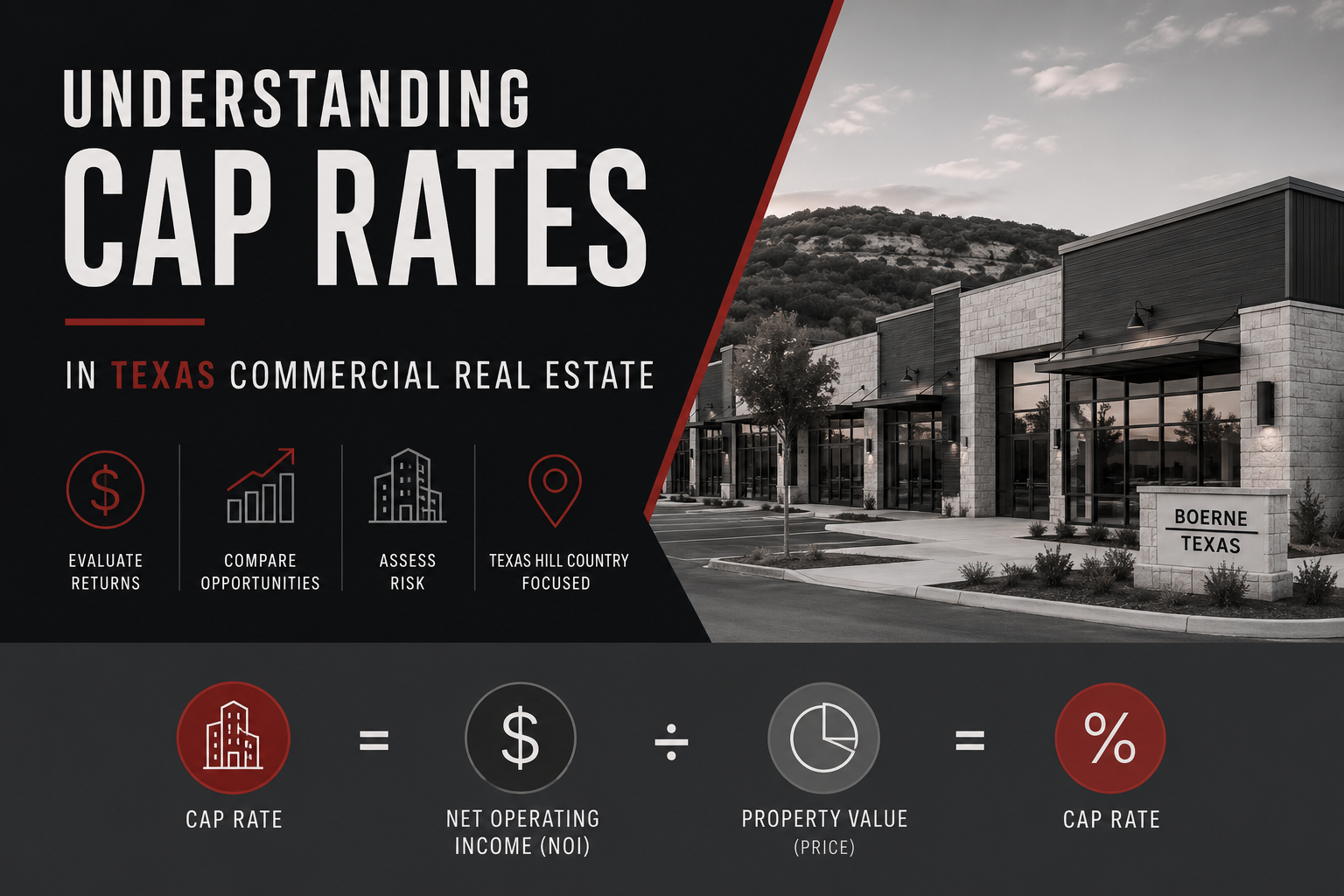
Texas commercial real estate cap rates remain one of the most important metrics investors use to evaluate commercial property performance. From Boerne to the Texas Hill Country, cap rates help buyers and sellers better understand risk, pricing, and long-term investment potential.
Quick Take
- Cap rates help estimate investment returns
- Lower cap rates often reflect lower perceived risk
- Higher cap rates may indicate more upside or higher risk
- Lease structure, tenant quality, and location all impact cap rates
- Texas Hill Country properties often trade differently than larger urban markets
What Is a Cap Rate?
A cap rate measures the relationship between a property’s income and value.
Cap Rate = Property ValueNet Operating Income (NOI)/Property Value
For example, a property generating $100,000 in annual net operating income and valued at $2,000,000 would have a 5% cap rate.
In general:
- Lower cap rates often suggest stronger demand and stable income
- Higher cap rates may reflect higher risk or value-add potential
Still, cap rates never tell the whole story.

What Impacts Cap Rates in Texas?
Several factors influence cap rates across Texas commercial real estate markets.
Location
Growing markets like Boerne and the Texas Hill Country continue attracting investor interest due to population growth and business expansion. Investors also continue monitoring ETJ growth corridors and Opportunity Zone areas as development expands across Central Texas.
Lease Structure
Long-term triple net leases often create more predictable income, which may support lower cap rates. Investors evaluating lease-backed assets should also understand how lease structures impact expenses, landlord responsibilities, and long-term valuation trends.
Property Type
Industrial, retail, office, land, and self-storage properties all carry different risk profiles and investor expectations.
Interest Rates
Higher borrowing costs can place upward pressure on cap rates as investors seek stronger returns.

Why Cap Rates Matter
Cap rates help investors compare opportunities quickly. They also help owners understand how buyers may value a property.
However, smart investors also evaluate:
- Tenant quality
- Deferred maintenance
- Lease terms
- Market growth
- Future rent potential
A lower cap rate property may offer stability. A higher cap rate property may offer upside potential.
The right investment depends on the investor’s goals and long-term strategy.
FAQ About Cap Rates
What is a good cap rate in Texas commercial real estate?
It depends on the property type, location, tenant stability, and market conditions. There is no universal “good” cap rate.
Do lower cap rates mean a better investment?
Not always. Lower cap rates often reflect lower perceived risk, but they may also offer lower returns.
How do triple net leases affect cap rates?
Properties with long-term triple net leases often attract investors seeking stable income, which can impact pricing and cap rates.
Final Thoughts
Cap rates are an important tool in commercial real estate investing, but context matters just as much as the number itself. At Boehm Commercial Group, we help investors and owners evaluate opportunities across Boerne, the Texas Hill Country, and Central Texas through practical market insight and long-term strategy.
If you are evaluating a property, considering a sale, or exploring investment opportunities, our team is here to help guide the conversation.
Call Us: 830-216-6232
Visit Us: www.TX-CRE.com
Email Us: Office@glenboehm.com

Your Trusted Real Estate Partner
Whether you’re looking for a top real estate agent for commercial needs or exploring opportunities with reputable commercial real estate companies, we are your dedicated partner. Reach out to our team today, and let’s discuss how you can become part of San Antonio’s promising growth story and leverage these developments as catalysts for your next investment.